Understanding the axle configuration of a tractor-trailer is crucial for safety, legal compliance, and efficient operation. While a simple answer might seem possible, the reality is far more nuanced. This comprehensive guide will clarify the complexities of tractor-trailer axles, providing a clear understanding for drivers, trucking companies, and anyone curious about these massive vehicles. For more on truck transmissions, check out this helpful guide on truck transmissions.
Understanding Basic Configurations
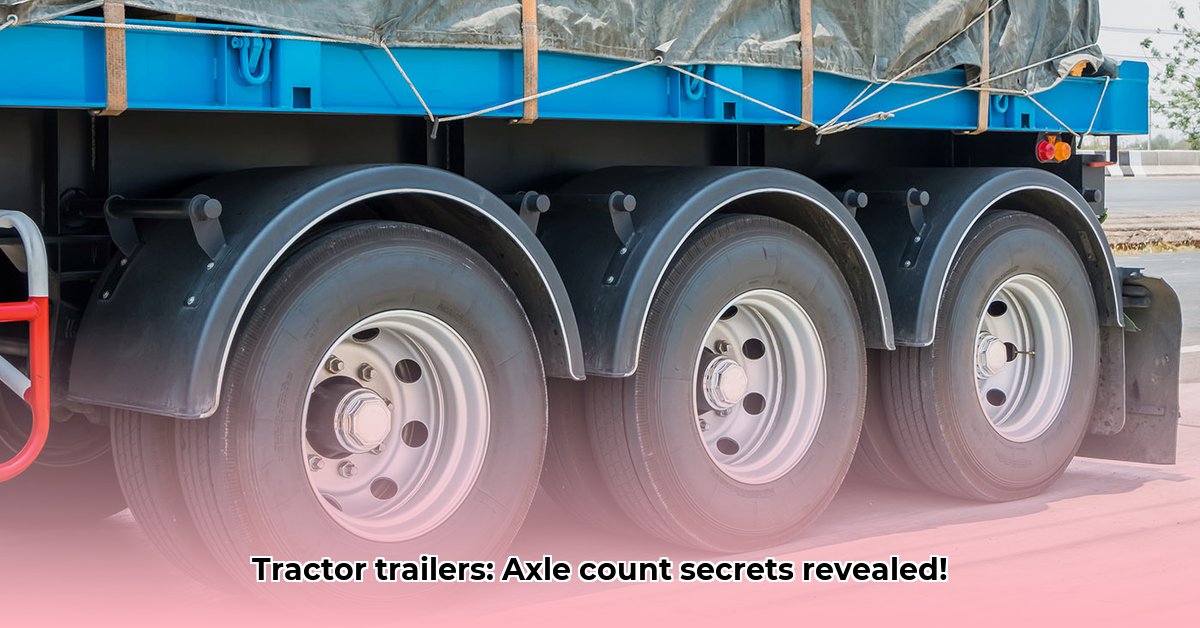
The most common tractor-trailer configuration features five axles. This standard setup typically consists of two axles on the tractor unit (the power unit) and three axles on the trailer. This arrangement offers a balance between weight capacity and maneuverability. However, this is just the starting point; many variations exist.
![Diagram of a standard 5-axle tractor-trailer] (A simple diagram would go here showing two tractor axles and three trailer axles clearly labeled.)
Variations and Exceptions
The number of axles can vary significantly based on several factors:
Trailer Type: Double trailers, commonly used for high-volume shipping, can easily have nine or more axles. Specialized trailers designed for oversized or heavy loads also require additional axles for weight distribution. Tanker trucks, depending on size and cargo, might have three to five axles.
Regional Regulations: Weight limits and permissible axle configurations vary considerably by state and country. These regulations are designed to protect infrastructure and ensure road safety. For example, a configuration legal in one state might be illegal in another. Always check local regulations before operating.
Cargo Weight: Heavier cargo necessitates a greater number of axles to distribute the weight safely and legally. This impacts both the total gross vehicle weight and the weight on each individual axle. Exceeding axle weight limits is both illegal and dangerous.
Axle Terminology Demystified
Let's untangle some common terms:
18-Wheeler: This is a colloquial term often used interchangeably with "semi-truck" and "tractor-trailer." However, while many five-axle tractor-trailers have eighteen wheels, the term itself doesn't specify axle configuration.
Semi-Truck: This refers specifically to the tractor unit – the part that contains the engine and cab.
Tractor-Trailer: This term refers to the entire combination of tractor and trailer.
Axle Configuration Notations (e.g., 4x2, 6x4): These notations indicate the total number of wheels and the number of drive wheels. A 6x4 configuration means six wheels total, with four drive wheels.
Legal and Safety Implications
Axle configuration is directly tied to legal weight limits and overall safety:
Weight Limits: Exceeding weight limits on individual axles or the gross vehicle weight is illegal and highly dangerous. It can lead to structural damage, tire failure, brake failure, reduced maneuverability, and increased risk of accidents.
Braking Systems: The number of axles impacts braking performance. More axles, properly loaded, generally improve braking efficiency and stopping distance.
Stability: Correct axle configuration and weight distribution are vital for vehicle stability, especially during turns, curves, or in adverse weather conditions. Improper weight distribution can significantly increase the risk of rollovers.
Road Safety: Overloaded or improperly configured vehicles pose a significant risk to all road users. This impacts the safety of not only the driver but also surrounding vehicles and pedestrians.
Regional Variations: A Brief Overview
Regulations regarding axle numbers and weight limits vary substantially based on location. What is permissible in one state or country might be strictly prohibited in another. Detailed research of specific regional regulations is always necessary before operating in a new locale.
Step-by-Step Guide: Determining Axle Configuration
Determining the optimal axle configuration for a specific load and region can be complex. However, this simplified process provides a general overview:
Determine Cargo Weight: Accurately weigh your cargo to establish the total weight being transported.
Identify Regional Regulations: Research weight limits for individual axles and the gross vehicle weight in your intended area of operation.
Select Preliminary Configuration: Choose a potential axle configuration based on the cargo weight and preliminary legal constraints.
Calculate Axle Loads: Distribute the weight across the axles, ensuring no axle exceeds its legal limit. Specialized software is often used for this.
Refine Configuration: If any axles exceed their weight limits, adjust the configuration or redistribute the weight within the legal boundaries while bearing safety in mind.
Verify Compliance: Before operation, ensure complete compliance with all regional regulations.
Conclusion: Key Takeaways
The number of axles on a tractor-trailer isn't a simple answer. It depends on the trailer type, cargo weight, and regional regulations. Understanding these aspects is vital for legal compliance and, critically, for ensuring road safety. Always prioritize safe and legal operations by consulting regional regulations and employing appropriate calculation methods.